Source Magnetic Resistance Indoor Cycling Bike for Gym, Home, and Training
Find and compare 30 Magnetic Resistance Indoor Cycling Bike options from verified manufacturers. Buyers can evaluate specifications like flywheel weight, resistance mechanisms, and certifications to select suitable cardio equipment for gymnasiums, home use, and strength training applications.
Key considerations
Products List

Ftiness Gym Equipment Indoor Cycling Magnetic Upright Bikes Exercise Bike
$900.00 - $1050.00
MOQ: 1 Sets


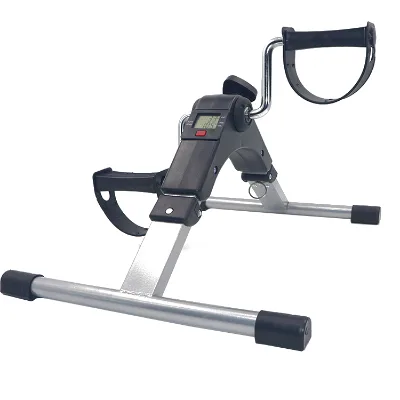


Indoor Cycling Stationary Spin Training Spinning Bike Fitness Bike for Gym
$190.00 - $220.00
MOQ: 20 Pieces


Factory Direct Sale Indoor Cycling Bike Exercise Commercial Spinning Bike
$198.00 - $211.00
MOQ: 100 Pieces


Comprehensive Sourcing Guide
Strategic Sourcing Guide for Magnetic Resistance Indoor Cycling Bikes
Understanding Core Technical Specifications and Variations
When sourcing magnetic resistance indoor cycling bikes, buyers must first distinguish between the specific mechanical architectures available in the current market. The provided data indicates a clear divergence in resistance mechanisms, with some units utilizing magnets while others rely on friction-based systems. A magnetic resistance bike operates by using magnets positioned near the flywheel to create eddy currents, generating resistance without physical contact. This design typically offers a smoother, quieter operation compared to friction-based alternatives where pads press against the flywheel. The observed product listings confirm the availability of "Magnetic Bike" types alongside units explicitly labeled with "Friction" resistance mechanisms.
The flywheel weight is a critical specification that dictates the riding feel and stability of the equipment. In the observed inventory, flywheel weights vary significantly, with specific models noting a weight of less than 10 kg and others listing a flywheel weight of 1.5 kg. While heavier flywheels generally provide a more consistent momentum and a "road-like" feel, lighter flywheels may be suitable for compact home setups or specific rehabilitation applications. Buyers should verify the exact flywheel mass for each unit, as this directly impacts the inertia and the smoothness of the pedal stroke. Additionally, the power source is a defining characteristic; while some units are described as "Electric" or powered by "Magnetism," it is essential to clarify whether the resistance adjustment is manual or motorized. The presence of "Electric" power in the attribute list suggests the existence of motorized resistance control systems, which differ from manual magnetic adjustment levers.
Dimensional specifications are equally vital for space planning and logistics. The observed standard dimensions for these units range from approximately 107x55x150 cm to larger configurations like 1200x5000x1450 mm, indicating a wide spectrum of product sizes from compact home models to commercial-grade gymnasium equipment. The folded state is noted as "Unfolded" for certain models, implying that some units may not be designed for compact storage, while others might offer foldability. The packaging dimensions, such as a carton size of 92cm x 24cm x 80cm, provide a realistic baseline for estimating shipping volume and warehouse requirements. Buyers must cross-reference these physical dimensions with their intended installation space to ensure compatibility.
Compliance, Certification, and Safety Standards
Navigating the regulatory landscape is a non-negotiable aspect of B2B procurement for fitness equipment. The supplied data highlights a consistent requirement for international safety and environmental certifications. Specifically, the CE (Conformité Européenne) and RoHS (Restriction of Hazardous Substances) certifications appear frequently across the product listings, indicating compliance with European safety, health, and environmental protection requirements. Some entries also include the GS (Geprüfte Sicherheit) mark, which is a German safety certification that often exceeds standard EU requirements, and the FCC (Federal Communications Commission) mark, which is relevant for any electronic components that may emit radio frequency interference.
The presence of multiple certifications in a single listing, such as CE, FCC, RoHS, and GS, suggests a higher tier of quality control and regulatory adherence. However, buyers must treat these as observations of specific listed products rather than universal guarantees for all inventory. It is imperative to request valid, current certification documents from the supplier for the specific model being purchased. The "Standard" attribute in the data lists specific dimensions (e.g., 107x55x150cm), but buyers should verify if these dimensions align with international safety standards for stability and load-bearing capacity.
For commercial applications, such as in gymnasiums, the equipment must often meet additional industry-specific safety standards. The data mentions "Strength Fitness Equipment" and "Body Building" as keywords, suggesting that some units are marketed for heavy-duty use. In these contexts, verifying that the steel frame construction meets tensile strength requirements is crucial. The "Material" attribute confirms the use of steel, which is the industry standard for durability, but the specific grade and thickness of the steel should be confirmed to ensure the equipment can withstand high-frequency use without structural fatigue.
Cost Drivers and Pricing Dynamics
The pricing for magnetic resistance indoor cycling bikes is influenced by a complex interplay of factors, including material quality, technological features, and order volume. The observed price range in the market spans from $9.50 to $1,050, a vast disparity that reflects the difference between basic entry-level models and high-end commercial units. This range suggests that the cost is not linearly correlated with the basic function of cycling but is heavily driven by the sophistication of the resistance mechanism, the build quality, and the included features.
One of the primary cost drivers is the customization capability. The data explicitly states that "Customization" is available, including options for "Customized Logo" and OEM/ODM services. Suppliers offering these services typically charge a premium due to the additional tooling, design, and production setup costs involved. The "Business Type" is listed as "Manufacturer/Factory," which often allows for more competitive pricing compared to trading companies, but the final cost will depend on the specific customization requirements.
Order volume is another significant factor. The observed Minimum Order Quantity (MOQ) ranges from 1 to 1000 units. While some suppliers may accept small orders of a single unit, the unit price for such low quantities will likely be at the higher end of the spectrum. Conversely, larger orders, such as those meeting the MOQ of 100 PCS or higher, often unlock tiered pricing structures. The data also mentions specific container loading quantities (Clq), such as 145 PCS per 20ft container, which can influence the landed cost per unit when factoring in shipping. Buyers should calculate the total cost of ownership, including shipping, duties, and potential customization fees, rather than focusing solely on the unit price.
Typical Applications and Market Segmentation
The versatility of magnetic resistance indoor cycling bikes allows them to serve diverse market segments, from residential users to commercial fitness centers. The "Application" attribute in the data lists both "Home" and "Gymnasium," indicating that the product line is designed to cater to both personal and professional environments. For home users, the "Usage" is defined as "Home Exercise Equipment," with a focus on features like "Comfortable" seating and compact designs that fit within residential spaces. The "Gender" is listed as "Unisex," ensuring broad appeal for household purchases.
In contrast, gymnasium applications demand higher durability and performance. The "Category" is identified as "Exercise Bike," and the "Function" is specified as "Cardio Exercise." Commercial units intended for gymnasiums often feature more robust construction, larger flywheels for smoother operation under heavy use, and advanced display systems. The observed "Display" attributes include metrics such as Scan, Time, Speed, Distance, and Calories, which are essential for tracking workout progress in both home and commercial settings.
The "Keyword" tags such as "Strength Fitness Equipment" and "Training Equipment" suggest that these bikes are also marketed for specialized training programs. The "Age" attribute is listed as "Adult," confirming that the equipment is designed for mature users and not for children. This distinction is important for liability and safety considerations, particularly in commercial settings where supervision may be required. Buyers should align their procurement strategy with the intended application, ensuring that the selected model meets the specific durability and feature requirements of the target environment.
Supplier Evaluation and Manufacturing Capabilities
Selecting the right supplier is critical for ensuring product quality and supply chain reliability. The data identifies the "Business Type" as "Manufacturer/Factory," which implies that the supplier has direct control over the production process. This is generally preferable to trading companies, as it allows for better quality control and more direct communication regarding technical specifications. The "R&D Capacity" is noted as "ODM & OEM," indicating that the supplier has the engineering resources to develop custom designs or modify existing models to meet specific buyer requirements.
The "Location" of the suppliers is a key logistical consideration. The observed origins include "Qingdao, China" and "Zhejiang, China," both of which are major manufacturing hubs for fitness equipment. These regions offer a mature supply chain ecosystem, but buyers should verify the specific factory location to assess proximity to ports and potential shipping lead times. The "Manufacturing & Processing Machinery" is listed as "Metallic Processing Machinery," suggesting that the supplier utilizes automated or semi-automated processes for frame fabrication, which can enhance consistency and precision.
When evaluating suppliers, buyers should look for evidence of a robust quality management system. The presence of certifications like CE, RoHS, and GS is a positive indicator, but it should be accompanied by a clear understanding of the supplier's internal quality control processes. The "Product Types" attribute mentions "Secured Trading Service," which may indicate participation in platform-specific buyer protection programs, adding a layer of security to the transaction. Buyers should also assess the supplier's ability to handle the "Customization" requests, such as logo printing and packaging modifications, to ensure they can meet branding and marketing needs.
Quality Control and Long-Term Procurement Considerations
Ensuring long-term value requires a rigorous approach to quality control (QC) and after-sales support. The "Condition" of the products is listed as "New," but this is a baseline requirement that must be verified upon delivery. For magnetic resistance bikes, the integrity of the magnetic system is paramount; any misalignment or degradation can lead to inconsistent resistance levels. The "Resistance Mechanisms" are described as "Magnets" or "Friction," and buyers should request test reports or samples to verify the smoothness and consistency of the resistance adjustment.
Packaging is another critical aspect of quality control. The data lists various packaging methods, including "Carton Box," "Waterproof Plastic Film+Foam+Carton Box," and "Waterproof+Foam+Carton." These details highlight the importance of protecting the equipment during transit, especially given the "Net Weight" and "Gr. Weight" specifications (e.g., 25kgs and 28.5kgs). Buyers should ensure that the packaging is robust enough to prevent damage to the frame, flywheel, and electronic components during shipping. The "Standard" dimensions provided can be used to verify that the packaging matches the product specifications and that the loading plan is optimized for container utilization.
Long-term procurement considerations also include the availability of spare parts and maintenance support. The "Material" is specified as "Steel," which is durable but susceptible to rust if not properly treated. Buyers should inquire about the surface treatment process to ensure longevity, especially for units used in humid environments. Additionally, the "Display" features, which include metrics like speed and distance, may require electronic components that could fail over time. Establishing a relationship with a supplier that offers a warranty and a supply chain for replacement parts is essential for minimizing downtime in commercial settings.
| Feature Category | Observation from Data | Procurement Verification Point |
|---|---|---|
| Resistance Type | Magnets, Friction | Confirm magnetic alignment and smoothness of adjustment. |
| Flywheel Weight | <10 kg, 1.5 kg | Verify weight impacts desired riding feel and stability. |
| Certifications | CE, RoHS, GS, FCC | Request valid certificates for the specific model. |
| Dimensions | 107x55x150cm to 1200x5000x1450mm | Match dimensions to installation space and shipping constraints. |
| Packaging | Carton, Foam, Waterproof Film | Ensure packaging prevents transit damage. |
| Customization | Logo, OEM/ODM | Confirm lead times and costs for branding modifications. |
In conclusion, sourcing magnetic resistance indoor cycling bikes requires a detailed understanding of the technical specifications, regulatory requirements, and supplier capabilities. By carefully evaluating the observed data and verifying critical details with suppliers, buyers can make informed decisions that align with their specific needs for quality, cost, and performance. The wide range of options available, from compact home units to commercial gymnasium equipment, offers significant flexibility, provided that the procurement process is grounded in rigorous due diligence and clear communication.
FAQs
What certifications do these bikes have?
These bikes typically carry CE, RoHS, and GS certifications. Some models also include FCC marks for electronic components. Buyers should verify specific documents for the exact unit purchased.
Can I customize the logo on the bike?
Yes, customized logo options are available for these units. The supplier offers OEM and ODM services to meet specific branding needs. This customization is suitable for both home and commercial applications.
Which resistance mechanisms are used in these bikes?
The bikes utilize either magnetic or friction resistance mechanisms. Magnetic systems offer smoother operation, while friction types use pads against the flywheel. Buyers must check the specific model to confirm the type.
How large is the standard packaging for these bikes?
Packaging varies by model, often using waterproof plastic film, foam, and carton boxes. One observed carton size is 92cm by 24cm by 80cm. Dimensions depend on the specific product model and its flywheel weight.
What is the minimum order quantity for these bikes?
The minimum order quantity ranges from 1 to 1000 units depending on the supplier. Some specific models list an MOQ of 100 pieces. Larger orders may unlock better container loading quantities for shipping.
Where are these bikes manufactured?
These bikes are manufactured in China, specifically in Qingdao and Zhejiang regions. The origin is listed as a major manufacturing hub for fitness equipment. Buyers should confirm the exact factory location for logistics planning.